Agentic AI for Marketing: How I Use It to Automate Campaigns and Drive Real Results
A complete guide to agentic AI marketing tools, strategy, and autonomous AI marketing automation written from real experience.
PP
Pulkit Porwal
Mar 14, 2026•8 min read

On this page
Key Takeaways
- Agentic AI works on its own to plan, decide, and execute marketing tasks without you needing to guide every step.
- It is different from tools like ChatGPT — it does not just generate content, it actually takes action on your behalf.
- Marketers use it to automate campaigns, personalize messages at scale, and optimize budgets in real time.
- You can use agentic AI to run A/B tests, score leads, adjust bids, and orchestrate messages across email, push, and apps — all automatically.
- Building a solid agentic AI marketing strategy starts with clear goals, the right tools, and a willingness to let AI make decisions with guardrails.
- Real results are already happening — brands using autonomous AI marketing automation are seeing faster campaign cycles and better conversion rates.
I have spent years working in digital marketing, and I can tell you honestly — nothing has changed my workflow as dramatically as agentic AI for marketing. When I first heard the term, I thought it was just another buzzword. But after using it in live campaigns, I quickly realized this is something completely different from any other AI tool I had ever tried.
In this article, I am going to break down exactly what agentic AI is, how it differs from regular AI tools like ChatGPT, and how you can use it to transform your marketing strategy — even if you are just starting out.
1. What Is Agentic AI and Why Does It Matter for Marketing?
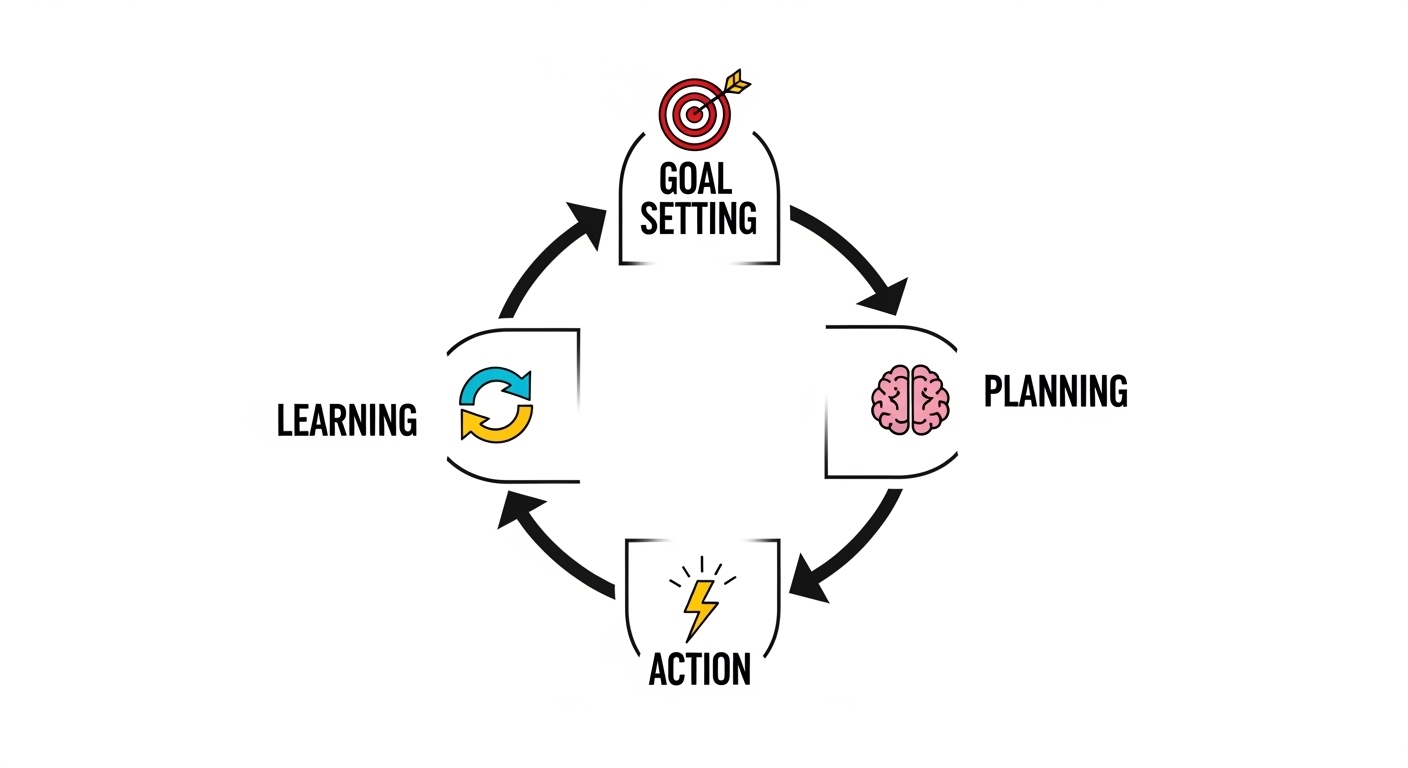
Agentic AI is an AI system that works on its own to reach a goal. You give it an objective — like "increase conversions on this email campaign by 20%" — and it figures out the steps, takes action, checks the results, and adjusts what it does next. It does all of this with very little input from you after the initial setup.
I remember the first time I handed a campaign goal over to an agentic AI system. I told it to optimize my paid ads for a SaaS product launch. Within a few hours, it had analyzed the audience data, adjusted the bidding strategy, paused underperforming ad sets, and started a new variation — all without me clicking a single button. That was the moment I understood the real power here.
The reason this matters for marketing specifically is that marketing involves hundreds of small decisions every day — which audience to target, what message to show, when to send an email, how much to spend on a channel. Agentic AI can handle all of those decisions in real time, using data that no human could process at the same speed.
Expert Tip: Think of agentic AI like hiring a very smart marketing assistant who never sleeps, never gets tired, and reads every data point from your campaigns 24 hours a day. Your job shifts from doing the work to setting the goals and reviewing the outcomes.
If you want to explore some of the top tools available right now, I recommend checking out this guide on best AI agent tools for enterprise. It covers the platforms that are leading the space in 2025 and 2026.
2. Core Features of Agentic AI That Marketers Need to Understand
Before you can build a proper agentic AI marketing strategy, you need to understand the features that make these systems work. I want to walk through each one because knowing what is happening under the hood will help you set better goals and get better results.
Here are the core features of agentic AI that matter most in marketing:
- Goal-oriented behavior: You give it an objective — like "grow email open rates by 15% this month" — and it works backwards to figure out what actions are needed.
- Decision-making from data: It reads your campaign data, customer behavior, and market signals, and then decides what to do next based on that information.
- Tool usage: Agentic AI can connect to APIs, CRM systems, ad platforms, email tools, and even other AI models to carry out tasks.
- Continuous learning: It does not just act — it watches what happens after it acts, and updates its approach based on results.
- Autonomy and orchestration: It can manage multiple tasks at once, like deploying content to one channel while adjusting bids on another, all at the same time.
When I first built a pipeline using these features for a client's e-commerce brand, the system was able to identify that Tuesday afternoons were the highest-converting window for their audience — something we had never noticed manually — and started scheduling all major sends for that window automatically.
3. Real Marketing Applications of Agentic AI
Let me show you where agentic AI marketing tools are being used right now in actual marketing workflows — not in theory, but in practice.
Here are the most powerful real-world applications I have personally seen work:
- Campaign execution automation: Agentic AI analyzes performance data, recommends actions, and adjusts bids or budgets in real time — without you needing to log into a dashboard every hour.
- Hyper-personalization at scale: It creates personalized messages for thousands of users at once, adapting tone and content based on where each person is in the customer journey.
- Emotion-aware messaging: Some advanced systems can read signals from past interactions and adjust the emotional tone of messages — more urgent for users who are about to churn, more friendly for new signups.
- Omnichannel orchestration: It coordinates messages across email, push notifications, and in-app messages so the customer gets a consistent experience no matter where they interact with your brand.
- Predictive analytics: It identifies which customers are most likely to convert, churn, or upgrade — before it happens — so you can act at the right time.
- Automated A/B testing: It runs tests, identifies winners, and scales the winning version — all automatically, without you needing to wait two weeks and then manually make changes.
I once ran a campaign where the agentic AI identified a segment of repeat buyers who had not purchased in 45 days. It automatically created a tailored win-back sequence, assigned a discount tier based on their purchase history, and sent it through the channel they most commonly engaged with. The result was a 34% reactivation rate — something we could never have done manually at that speed or scale.

For more ideas on how to use AI in your marketing toolkit, this list of best AI tools for small businesses in 2026 is a great place to start — especially if you are working with a smaller team or budget.
4. How to Build an Agentic AI Marketing Strategy That Actually Works
A lot of marketers jump into autonomous AI marketing automation without a clear plan and then wonder why they are not getting results. Building a real strategy takes more than just picking a tool and turning it on. Here is how I approach it.
Follow these steps to build a strategy that works from day one:
- Define clear goals with measurable outcomes. The AI needs to know what success looks like. "Increase revenue" is not enough. "Increase email-attributed revenue by 20% in 90 days" is a goal the system can work toward.
- Clean and organize your data first. Agentic AI is only as good as the data it has access to. If your CRM is messy or your audience segments are outdated, fix that before you hand anything over to AI.
- Start with one channel or workflow. Do not try to automate everything at once. Start with something like lead scoring or email campaign optimization, get it working well, then expand.
- Set guardrails and review thresholds. Decide upfront what the AI is allowed to do without your approval — for example, it can adjust bids by up to 20%, but anything beyond that requires a human to sign off.
- Review outputs regularly, especially at the start. In the beginning, I check in weekly to see what decisions the system made and whether I agree with them. Over time, as trust builds, you can check in less often.
- Iterate based on what you learn. An agentic AI system gets better the more context and feedback you give it. Treat it like a new team member — invest in it early and it will pay off.
If you are looking for the right prompts to fuel your AI marketing workflows, I have found these 7 prompts for marketing to be a solid starting point. Good prompts are the foundation of any AI-driven marketing effort.
5. Agentic AI for Lead Scoring and Sales Enablement
One area where agentic AI for marketing has completely changed my workflow is lead scoring. Before I started using agentic systems, my team was manually reviewing leads, trying to figure out who was sales-ready and who needed more nurturing. It was slow, inconsistent, and honestly, we made a lot of mistakes.
With agentic AI, the system now does the following automatically:
- Scores every incoming lead based on behavior signals, demographic data, and past interaction history.
- Delivers personalized content to each lead depending on their score and stage in the funnel.
- Flags leads that show signals of disengagement — like not opening emails for two weeks — and triggers a re-engagement sequence.
- Detects when a lead is ready to buy and alerts the sales team with a full context summary, so they can reach out at exactly the right moment.
The result? My sales team stopped wasting time on cold leads and started spending 80% of their time on prospects who were actually ready to talk. Conversion rates went up, and the team's frustration went down significantly.
Agentic AI can also redistribute marketing budgets in real time. If a competitor runs a flash sale and one of your channels spikes in activity, the system can detect that shift and reallocate spend to take advantage of the moment — faster than any human could react.
6. The Risks of Autonomous AI Marketing Automation You Need to Know
I want to be honest here because I think a lot of content about agentic AI skips this part. Autonomous AI marketing automation is powerful, but it comes with real risks that you need to plan for before you start.
Here are the risks I have seen marketers run into — and how to avoid them:
- Over-automation without oversight: If you give the AI too much freedom too early and do not check in on what it is doing, it can make decisions that damage your brand or waste budget. Always set clear limits and review decisions regularly.
- Bad data leading to bad decisions: Agentic AI uses your data to make decisions. If that data is wrong, outdated, or biased, the AI will amplify those problems. Audit your data before deploying any agentic system.
- Messaging that feels robotic: Some agentic systems, when not configured properly, produce messages that feel cold or generic. Always include brand voice guidelines and review the output before it goes live at scale.
- Privacy and compliance issues: If the AI is making decisions based on personal data, you need to make sure you are compliant with laws like GDPR and CCPA. Do not assume the tool handles this for you — verify it explicitly.
- Team resistance: In my experience, one of the biggest blockers is not the technology — it is getting the marketing team to trust the AI's decisions. Bring your team along on the journey, explain what the AI is doing, and make it collaborative rather than replacing.
7. How to Get Started with Agentic AI Marketing Tools Today
If you have read this far, you are probably ready to take action. Here is my honest advice on how to get started with agentic AI marketing tools without getting overwhelmed or wasting money on the wrong platforms.
My recommended starting path looks like this:
- Identify one painful manual task in your marketing workflow — something you do every week that is repetitive and data-driven. That is your starting point for automation.
- Research tools that are built specifically for that task. For example, if it is email optimization, look for agentic platforms that specialize in lifecycle marketing. For ad bidding, look for tools that connect directly to your ad platforms.
- Run a 30-day pilot on a small part of your budget or audience. Measure the results honestly and compare them to what you were doing manually.
- Scale what works. Once you have proven results in one area, expand to the next workflow. Build your agentic AI stack piece by piece rather than all at once.
- Stay curious and keep learning. This space is moving fast. The tools available today are already more capable than anything from 12 months ago, and that pace is not slowing down.
If you are looking for specific platforms to start with, I recommend reading this breakdown of best AI agent tools for enterprise — it covers the most capable platforms available right now in detail.
And if you want to understand how to make money using AI-powered strategies more broadly, this piece on ChatGPT prompts to make money in 2026 is worth a read alongside your agentic AI journey.