Drawing Prompts: 50+ Creative Ideas for Kids and Beginners (2026)
Explore 50+ drawing prompts for kids and beginners — from fantasy worlds to sci-fi cities.

On this page
Key Takeaways
| Question | Quick Answer |
| What are drawing prompts? | Short ideas or scenes that tell you what to draw, so you never stare at a blank page again. |
| Who are these prompts for? | Kids, beginners, hobbyists, and anyone who wants to practice their art skills. |
| How many prompts are in this article? | 50 prompts across 5 categories: Fantasy, Animals & Nature, Sci-Fi, Everyday Life, and Storytelling. |
| Do I need to be good at drawing? | No. These prompts work for any skill level — the goal is creativity, not perfection. |
| Can I use these for school or art class? | Yes, these are perfect for classroom use, homework, sketchbooks, or personal practice. |
What Are Drawing Prompts and Why Do They Work?

Imagination and Fantasy Drawing Prompts
- Imagine a city floating high above the clouds, where bridges connect islands in the sky. Think about how people travel, what their homes look like, and what lies beneath the clouds.
- Draw a dragon who is afraid of fire instead of breathing it. Show how it protects itself and how others react to such an unusual dragon.
- Illustrate a giant ancient tree with a hidden magical door in its trunk. What kind of world exists inside, and who guards the entrance?
- Create a magical library where books come alive when opened. Show characters or creatures emerging from the pages and interacting with readers.
- Design a creature made entirely of water living in a lake or ocean. Show how its form changes and blends with its surroundings.
- Draw a snow globe that contains an entire living world inside it. What happens when someone shakes it, and how do the inhabitants react?
- Imagine a giant living peacefully under a mountain. Show how the mountain connects to their daily life and surroundings.
- Create a glowing portal in your room that leads to another universe. What can be seen through it, and would you step inside?
- Draw a floating island with its own ecosystem and weather system. Include unique plants, animals, and structures that survive there.
- Illustrate a wizard's cluttered workshop filled with magical objects. Show potions bubbling, spells in progress, and unexpected magical mishaps.
Expert tip: When using fantasy prompts, draw the environment first before adding any characters. Getting the world right makes it much easier to place figures and objects inside it in a way that looks natural.

Animals and Nature Drawing Prompts
- Combine two animals into one unique hybrid creature. Show its habitat, abilities, and how it survives in nature.
- Draw a jungle at night illuminated by glowing plants and insects. Focus on how light and shadows create a mysterious atmosphere.
- Illustrate a day in the life of a honeybee collecting nectar. Show the journey from flower to hive and interactions with other bees.
- Imagine a deep-sea creature that has never been discovered before. Design its appearance based on extreme ocean conditions.
- Create a scene showing all four seasons in one landscape. Divide the environment creatively while keeping it connected.
- Draw an animal working in a human profession like a chef or teacher. Show how it adapts tools and environment to its abilities.
- Illustrate a desert landscape hiding a secret world beneath the sand. Show both the surface and what lies underneath.
- Draw a bird's-eye view of a dense rainforest. Include rivers, wildlife, and layers of vegetation.
- Create an underwater city where fish and sea creatures live like humans. Show buildings, transportation, and daily activities.
- Design a miniature ecosystem inside a glass jar. Include plants, insects, and a balanced environment.
Expert tip: For animal hybrid prompts, spend five minutes studying the real anatomy of both animals before you draw anything. Understanding how the bodies actually work makes the combination look believable, not random.

Sci-Fi and Future Drawing Prompts
- Imagine a futuristic city powered entirely by renewable energy. Show solar panels, wind turbines, and eco-friendly buildings.
- Draw a robot learning how to paint like a human artist. Show its progress and emotional expression through art.
- Illustrate life on another planet with strange landscapes and creatures. Think about gravity, atmosphere, and environment.
- Create a time machine in the moment it is being used. Show motion, energy, and the transition between times.
- Draw a spaceship landing on Earth in a populated area. Show reactions of people witnessing this event.
- Imagine a human colony on Mars. Include habitats, technology, and daily human activities.
- Illustrate a cyberpunk street filled with neon lights and advanced tech. Show a mix of humans and machines interacting.
- Draw a world where AI robots live just like humans. Show their homes, jobs, and emotions.
- Create a futuristic classroom with advanced learning tools. Show how students interact with technology.
- Imagine a world without gravity. Show how people move, build, and live in such an environment.
Expert tip: Sci-fi drawings look more convincing when you include ordinary details alongside the futuristic ones — a worn-out sign, a street food cart, a tired face in a crowd. That contrast is what makes the world feel real.

Everyday Life with a Twist Drawing Prompts
- Draw your home as it might look 100 years in the future. Include futuristic design and technology.
- Illustrate a normal day where everything is upside down. Show how people adapt to this unusual situation.
- Imagine a school completely run by animals. Show classrooms, teachers, and students.
- Draw a rainy day where something unusual falls from the sky. It could be candy, stars, or anything imaginative.
- Create a kitchen where food comes alive and interacts. Show chaos, fun, or teamwork among the food.
- Draw a self-portrait in a fantasy or superhero style. Add powers, costumes, and a unique setting.
- Design your dream bedroom with creative and unusual features. Include things that reflect your personality.
- Illustrate a street where every building has a different theme. Show diversity in architecture and purpose.
- Draw a picnic taking place on another planet. Show alien landscapes and unusual food.
- Imagine a festival in your town with magical elements. Include decorations, performances, and atmosphere.

Storytelling and Emotion Drawing Prompts
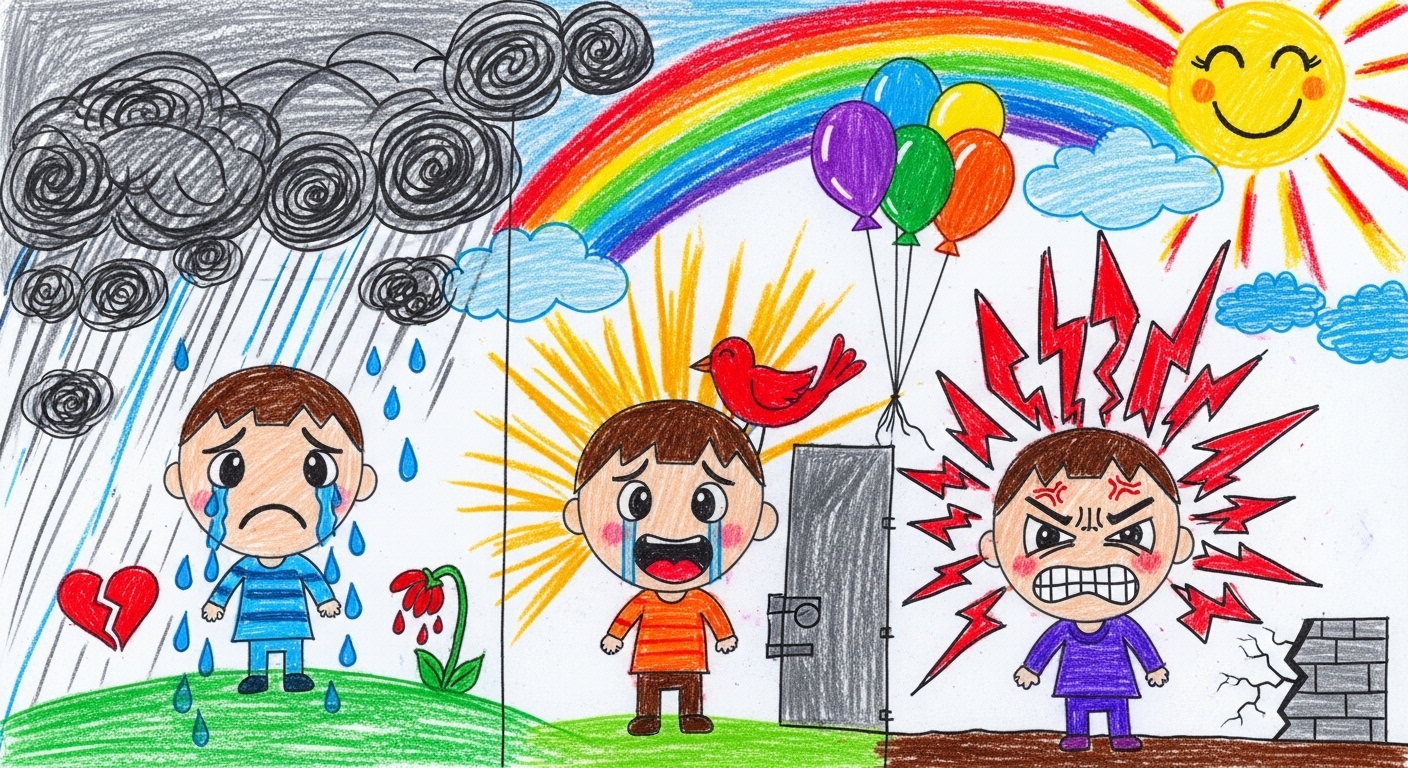
- Draw what happiness would look like as a place. Use colors, shapes, and elements to express emotion.
- Illustrate fear as a character or environment. Show how it feels visually.
- Create a scene where a character discovers hidden treasure. Focus on their reaction and surroundings.
- Draw the moment just before a big adventure begins. Show anticipation and preparation.
- Illustrate a hero facing their greatest challenge. Show tension, emotion, and action.
- Draw a dream you recently had or imagine one. Use surreal and unusual elements.
- Recreate a scene from your favorite story in your own style. Add your own creative twist.
- Illustrate a childhood memory that is meaningful to you. Focus on emotions and details.
- Draw a world that has only one color or no color at all. Show how this affects the environment and life.
- Create a scene where a character is saying goodbye. Show emotions, setting, and story through expressions.
Expert tip: Emotion-based prompts are where young artists usually discover their personal drawing style. When you draw what you feel, every decision — line weight, color, composition — is entirely your own. That is when art stops being practice and starts being personal.
How to Generate Drawing Prompts on Your Own
- Pick one subject — an animal, a person, a place, or an object
- Add one twist — a contradiction, a setting change, or an unexpected emotion
- Add one guiding question — something that pushes you to think about the details

Tips for Getting the Most Out of Every Drawing Prompt
- Set a time limit. Give yourself 20 minutes per prompt. This stops overthinking and forces quick, instinctive decisions — which often produce the best results.
- Do not erase, just keep going. If a line is wrong, draw another line over it. Accepting mistakes is one of the most important habits you can build as an artist.
- Pick prompts that feel slightly uncomfortable. If you always draw animals, try a sci-fi prompt. Growth happens at the edge of what you already know.
- Add your own rules to a prompt. Try doing it with only three colors, or from an unusual perspective, like from a mouse sitting on the floor looking up.
- Keep a sketchbook only for prompts. Date every entry. After three months, flip back to the beginning — the progress will surprise you every time.
